///
Creative Direction
and
Printed Media
Design
.wrk
A.C.C.J COMMUNITY ZINE
2025, Tokyo
2025, Tokyo
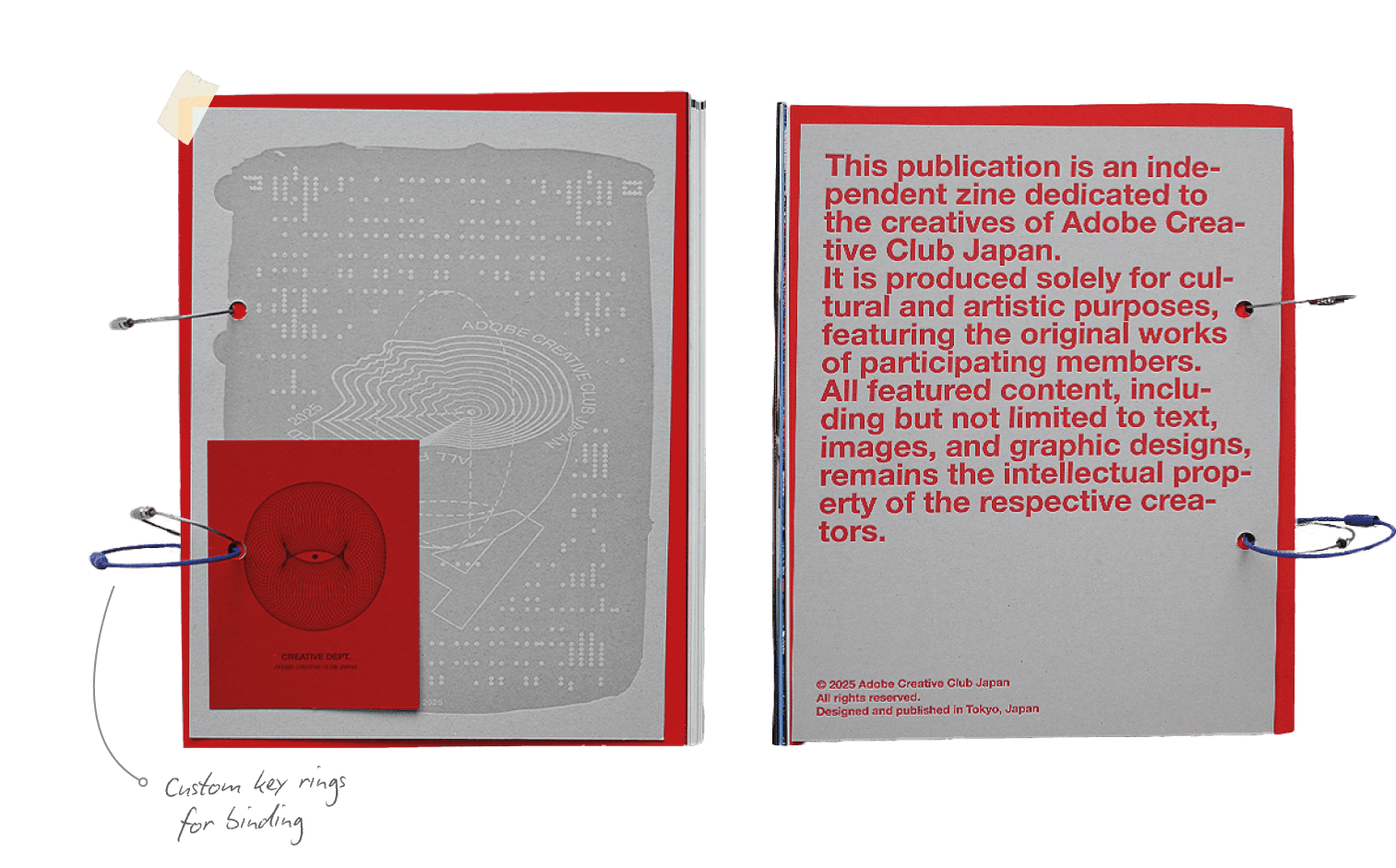
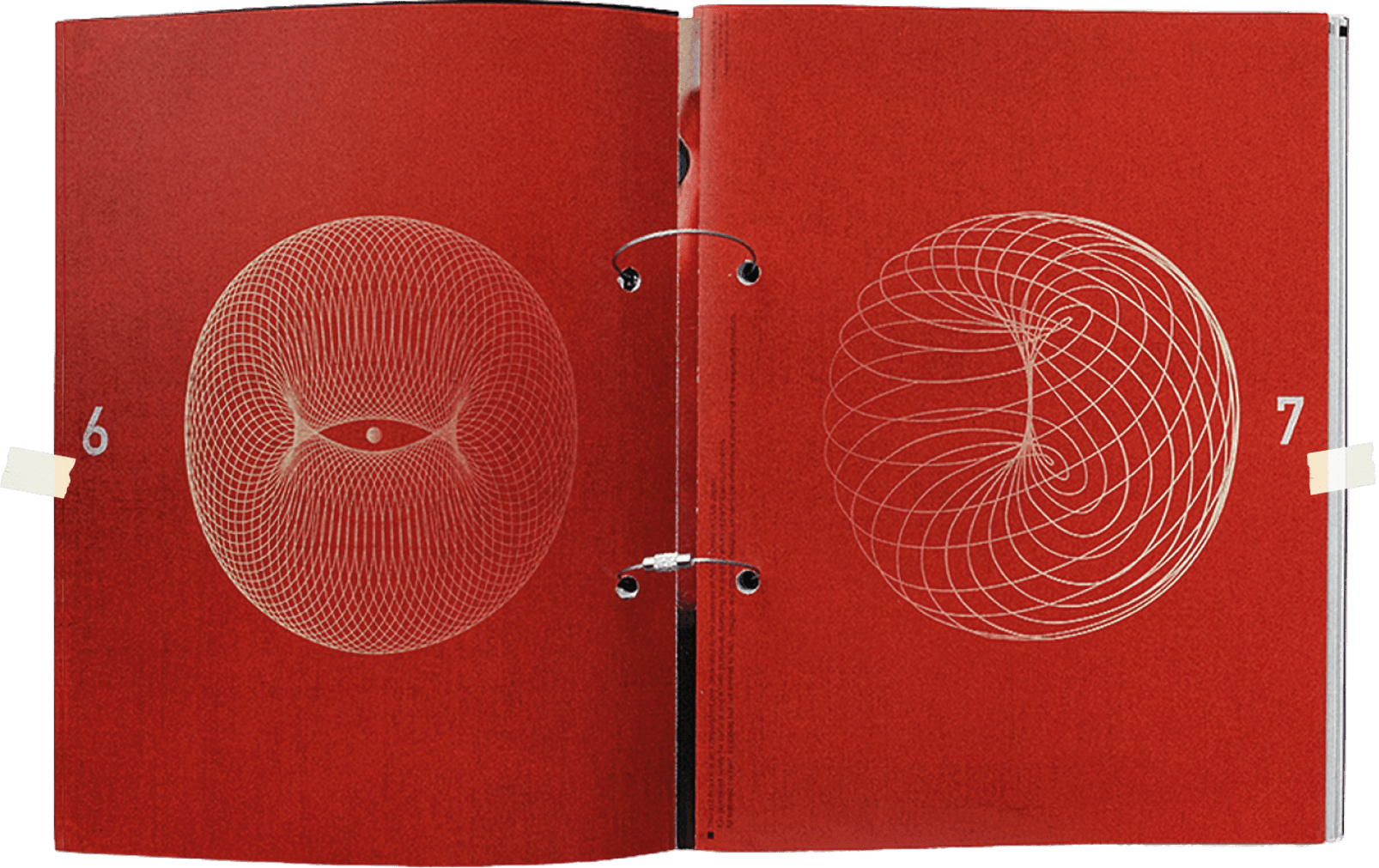
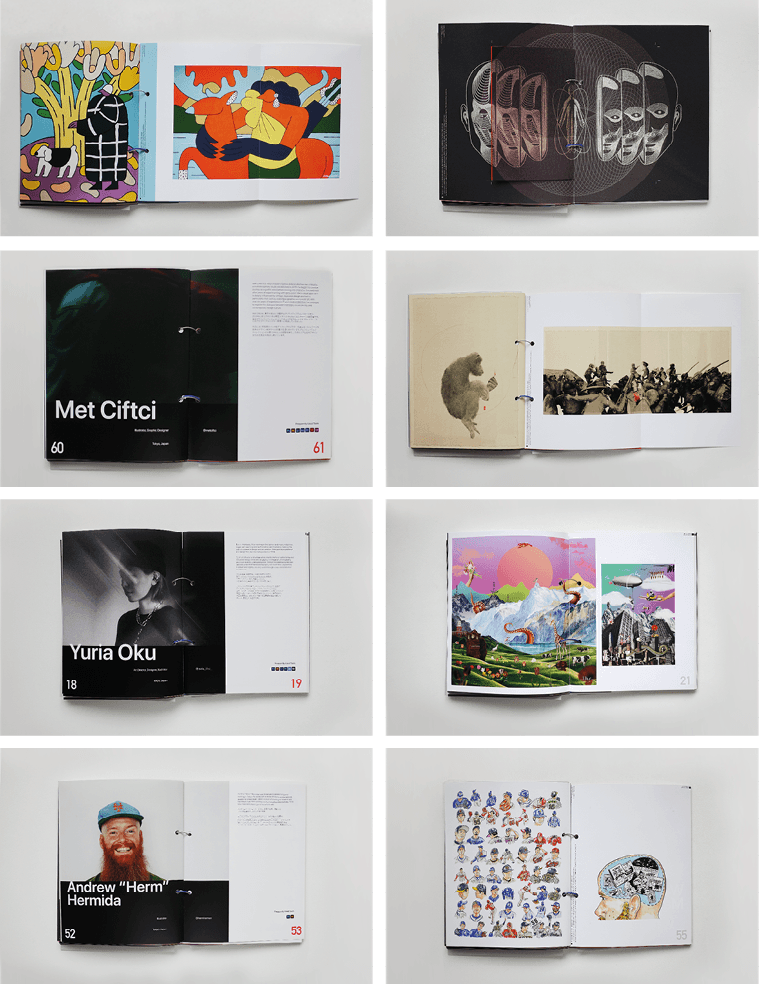
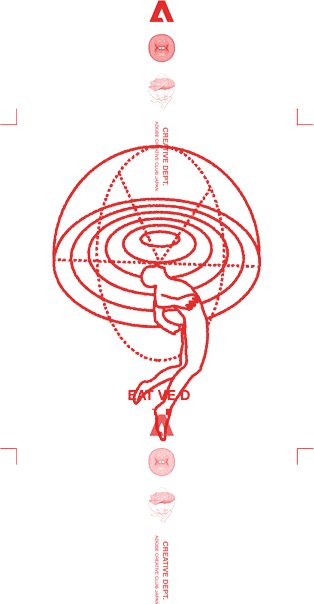
We designed the community zine for ACCJ (Adobe Creative Club Japan), developing a handmade visual language that reflects the club’s open, evolving nature. The zine features removable binder rings, allowing pages to be added or rearranged over time — a physical expression of the community’s expanding structure and versatility.
In addition to leading the overall creative direction, We managed the full production process, including print supervision, material selection, and finishing details, ensuring the tactile quality aligned with the concept.
We designed the community zine for ACCJ (Adobe Creative Club Japan), developing a handmade visual language that reflects the club’s open, evolving nature. The zine features removable binder rings, allowing pages to be added or rearranged over time — a physical expression of the community’s expanding structure and versatility.
In addition to leading the overall creative direction, We managed the full production process, including print supervision, material selection, and finishing details, ensuring the tactile quality aligned with the concept.
ACCJ/CMNTYZN_25_ver01
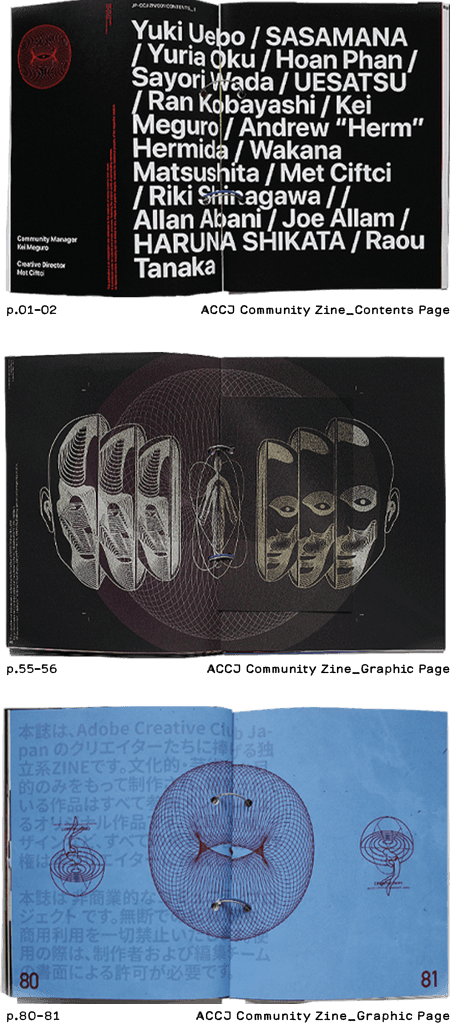
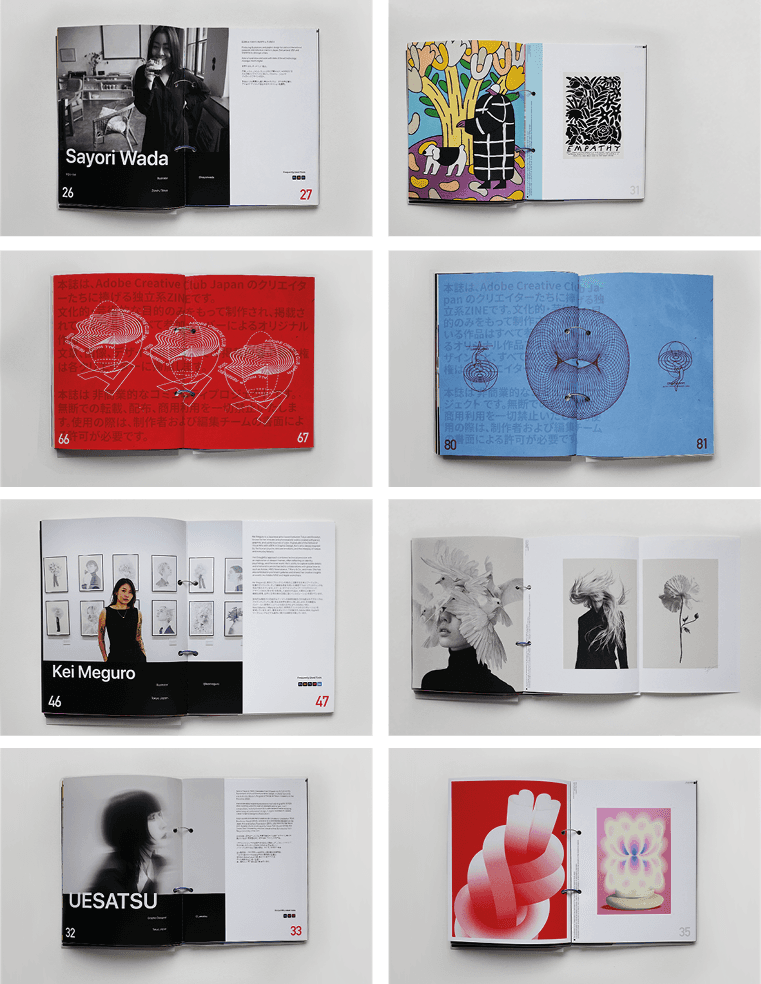
We designed the zine as a simple portfolio for each artist in the community, giving everyone a dedicated space to present their work. Each section includes a selection of their signature projects, a short personal introduction, and details about the Adobe tools they use most frequently in their creative process. The goal was to not only showcase finished works, but also give insight into how each artist thinks and creates.
The layout system was kept clear and consistent throughout the publication so that all artists were presented in a fair and balanced way. At the same time, the structure allowed enough flexibility for individual styles and visual differences to stand out. This approach helped the zine function both as a collective publication and as a personal portfolio platform for every contributor in the community.
ACCJ/CMNTYZN_25_ver01
We designed the zine as a simple portfolio for each artist in the community, giving everyone a dedicated space to present their work. Each section includes a selection of their signature projects, a short personal introduction, and details about the Adobe tools they use most frequently in their creative process. The goal was to not only showcase finished works, but also give insight into how each artist thinks and creates.
The layout system was kept clear and consistent throughout the publication so that all artists were presented in a fair and balanced way. At the same time, the structure allowed enough flexibility for individual styles and visual differences to stand out. This approach helped the zine function both as a collective publication and as a personal portfolio platform for every contributor in the community.
///
Rebranding
+
Printed Media
Design
.wrk
MIZANPLAS
2025, London
2025, London
Mizanplas is a wine and food magazine that explores niche wineries and independent producers around the world. We were responsible for the creative direction of the first issue, including the full visual direction — from layout design to custom graphics and hand-drawn illustrations — shaping the magazine’s unique and immersive aesthetic.
Mizanplas is a wine and food magazine that explores niche wineries and independent producers around the world. We were responsible for the creative direction of the first issue, including the full visual direction — from layout design to custom graphics and hand-drawn illustrations — shaping the magazine’s unique and immersive aesthetic.
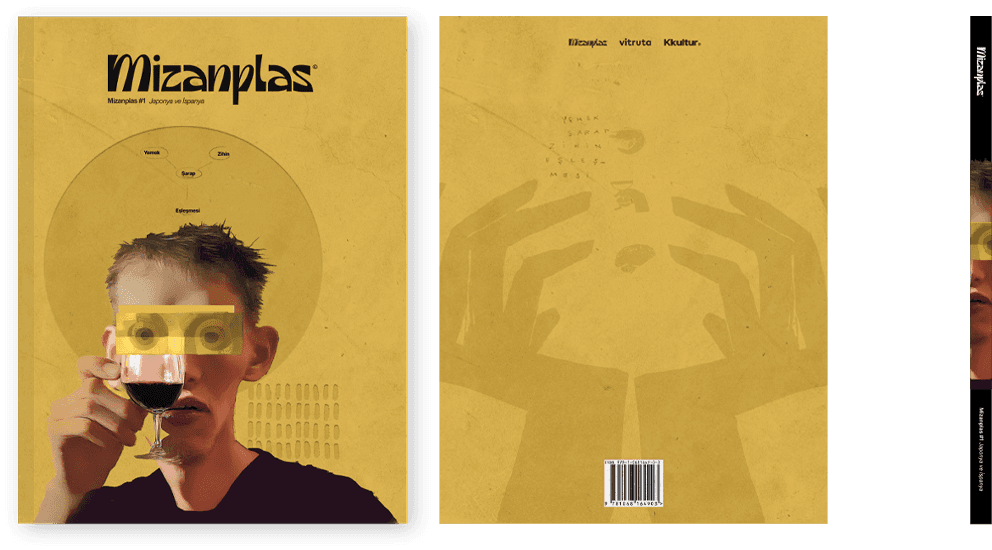
We led the complete rebranding of Mizanplas and built its visual identity entirely from the ground up. Starting with research and concept development, we defined the overall creative direction and translated it into a clear and consistent visual system. We designed all core elements, including the logo, color palette, typography approach, illustrations, graphic language, layout structure, and social media content. Every detail was developed to ensure that the magazine would have a strong and recognizable presence across both print and digital platforms.
In addition to the visual design work, we oversaw the art direction of the magazine’s overall look and feel, making sure that each issue followed the same identity while still allowing flexibility for different themes and stories. We printed the magazine in the UK to ensure high production quality and distributed it to more than 15 countries worldwide, reaching an international audience. The first launch event was held in London in November 2025, bringing together creatives and readers to introduce the new identity. Later in the same month, we organized a second launch event in Istanbul, expanding the community and strengthening the brand’s presence in another key city.
We led the complete rebranding of Mizanplas and built its visual identity entirely from the ground up. Starting with research and concept development, we defined the overall creative direction and translated it into a clear and consistent visual system. We designed all core elements, including the logo, color palette, typography approach, illustrations, graphic language, layout structure, and social media content. Every detail was developed to ensure that the magazine would have a strong and recognizable presence across both print and digital platforms.
In addition to the visual design work, we oversaw the art direction of the magazine’s overall look and feel, making sure that each issue followed the same identity while still allowing flexibility for different themes and stories. We printed the magazine in the UK to ensure high production quality and distributed it to more than 15 countries worldwide, reaching an international audience. The first launch event was held in London in November 2025, bringing together creatives and readers to introduce the new identity. Later in the same month, we organized a second launch event in Istanbul, expanding the community and strengthening the brand’s presence in another key city.
The 120-page first issue included interviews with respected and long-established wine producers from Japan and Spain, as well as conversations with local restaurant owners who are closely connected to the wine scene. In addition to these interviews, the magazine featured travel tips, recommendations, and a carefully selected range of wines from different regions around the world. The content was structured to give readers both knowledge and inspiration, combining industry insight with lifestyle elements. Visually, we took a colorful approach to reflect the vivid and energetic nature of the wine world. Strong color combinations, bold layouts, and expressive graphics were used throughout the pages to create a dynamic reading experience and to capture the lively atmosphere of wine culture.
The 120-page first issue included interviews with respected and long-established wine producers from Japan and Spain, as well as conversations with local restaurant owners who are closely connected to the wine scene. In addition to these interviews, the magazine featured travel tips, recommendations, and a carefully selected range of wines from different regions around the world. The content was structured to give readers both knowledge and inspiration, combining industry insight with lifestyle elements. Visually, we took a colorful approach to reflect the vivid and energetic nature of the wine world. Strong color combinations, bold layouts, and expressive graphics were used throughout the pages to create a dynamic reading experience and to capture the lively atmosphere of wine culture.
///
Logo
Design
and
Branding
Direction
.wrk
LOGOFOLIO
2025
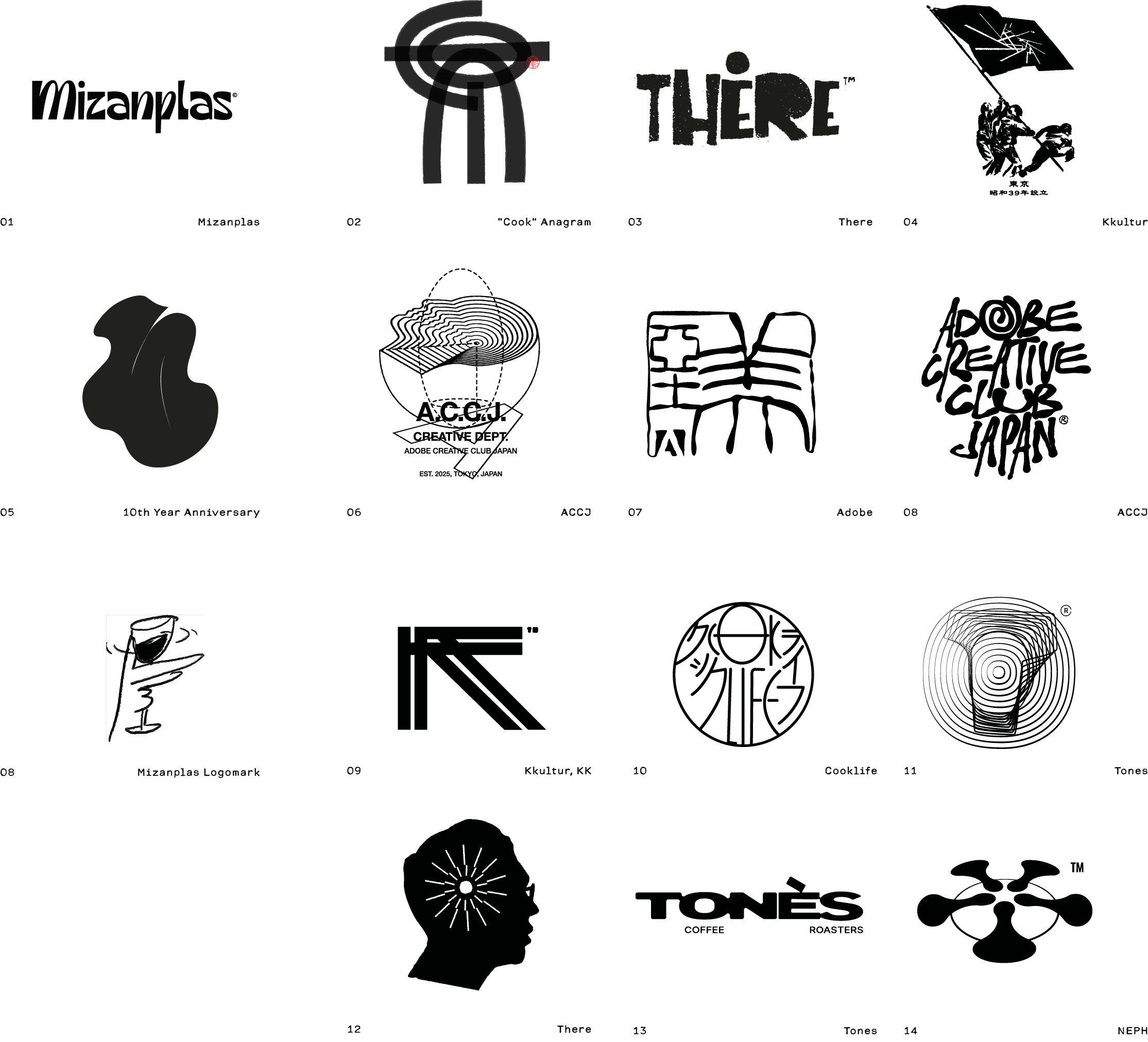
We have designed logomarks for various types of clients, with a visual style rooted in handmade, vintage-inspired graphics rather than rigid, grid-based systems.
We have designed logomarks for various types of clients, with a visual style rooted in handmade, vintage-inspired graphics rather than rigid, grid-based systems.
///
Logo
Design
and
Packaging
System
.wrk
(CASE STUDY 1)
(CASE STUDY 1)
TONES COFFEE ROASTERS
2025,Tokyo
2025,Tokyo
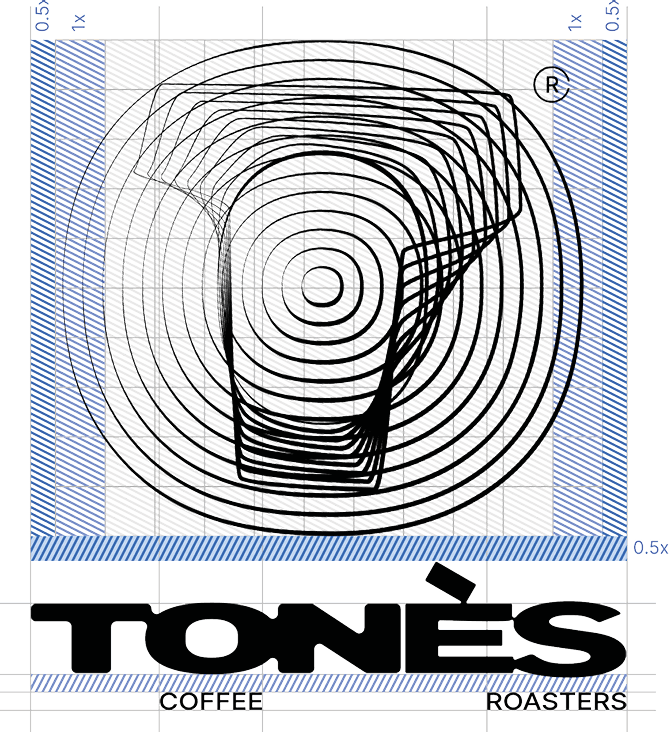
For this project, we created a logomark by transforming the letter “T” from TONES into a soundwave form. This visual connects the idea of music and vibration with the concept of people coming together. The soundwave symbol represents how different individuals, with different backgrounds and identities, can exist in harmony. For the typography, we chose a bold font for the main title “TONES” to give it a strong and confident presence. We paired it with a simpler and cleaner subtitle to create balance and improve readability. In the main title, we also applied the concept of harmony by placing the letters close to each other and allowing them to slightly merge and interact. This creates a visual sense of connection, showing that different elements can blend together while still keeping their own form.
For this project, we created a logomark by transforming the letter “T” from TONES into a soundwave form. This visual connects the idea of music and vibration with the concept of people coming together. The soundwave symbol represents how different individuals, with different backgrounds and identities, can exist in harmony. For the typography, we chose a bold font for the main title “TONES” to give it a strong and confident presence. We paired it with a simpler and cleaner subtitle to create balance and improve readability. In the main title, we also applied the concept of harmony by placing the letters close to each other and allowing them to slightly merge and interact. This creates a visual sense of connection, showing that different elements can blend together while still keeping their own form.
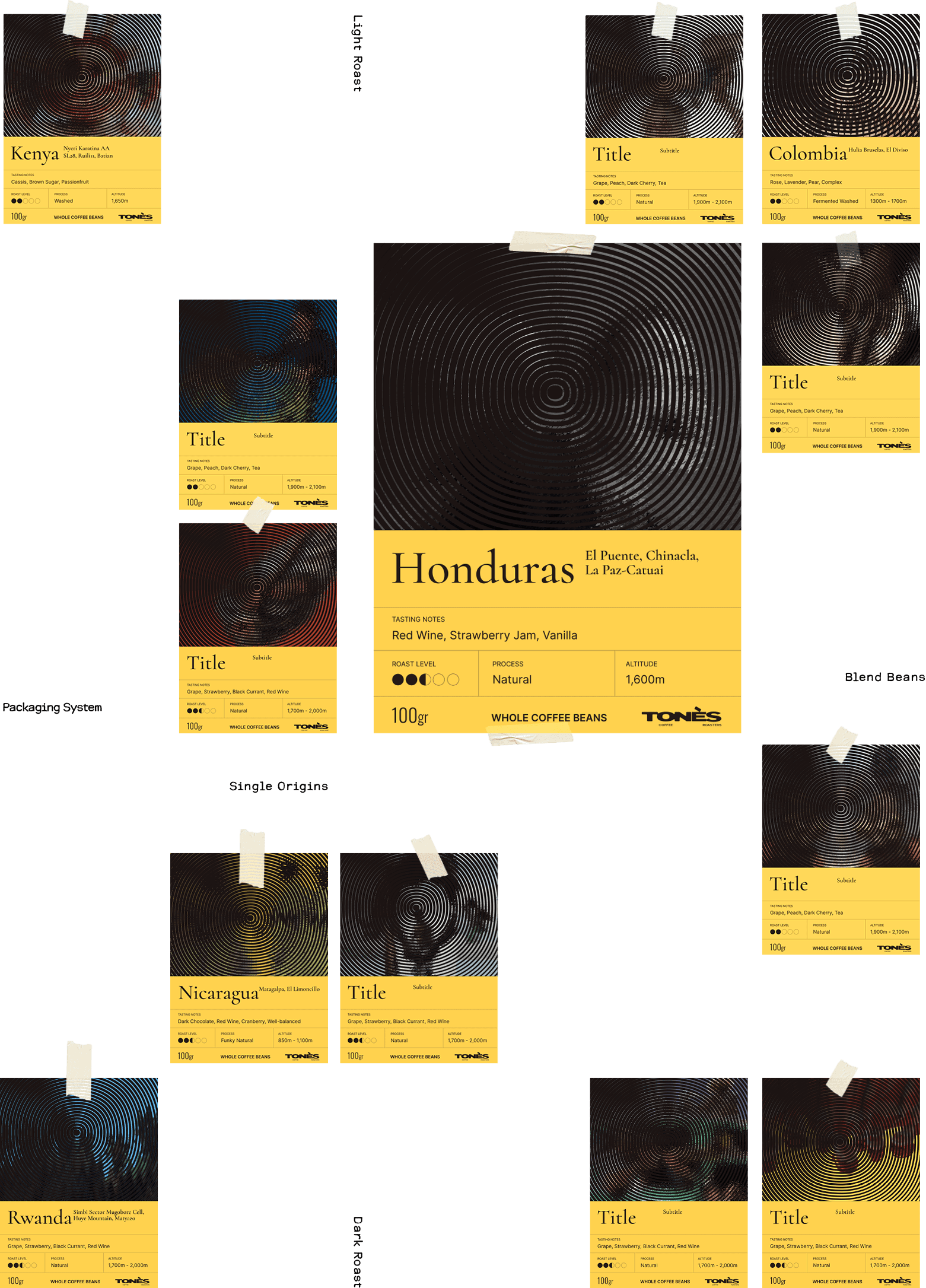
For the coffee bean packaging system, we used different tones of our main color, mustard, to clearly indicate the roasting levels as well as the single origin and blend variations. This color system helps customers quickly understand the differences between each product while keeping a strong and consistent brand identity. The graphics on the packages were developed based on the concept of soundwaves, continuing the visual language of the brand. We intentionally blurred and slightly distorted these graphics so that they do not form a clear shape when viewed up close. However, when seen from a distance, the composition becomes more recognizable and balanced.
For the coffee bean packaging system, we used different tones of our main color, mustard, to clearly indicate the roasting levels as well as the single origin and blend variations. This color system helps customers quickly understand the differences between each product while keeping a strong and consistent brand identity. The graphics on the packages were developed based on the concept of soundwaves, continuing the visual language of the brand. We intentionally blurred and slightly distorted these graphics so that they do not form a clear shape when viewed up close. However, when seen from a distance, the composition becomes more recognizable and balanced.
///
Logo
Design
.wrk
(CASE STUDY 2)
(CASE STUDY 2)
THERE
2025,Tokyo
2025,Tokyo
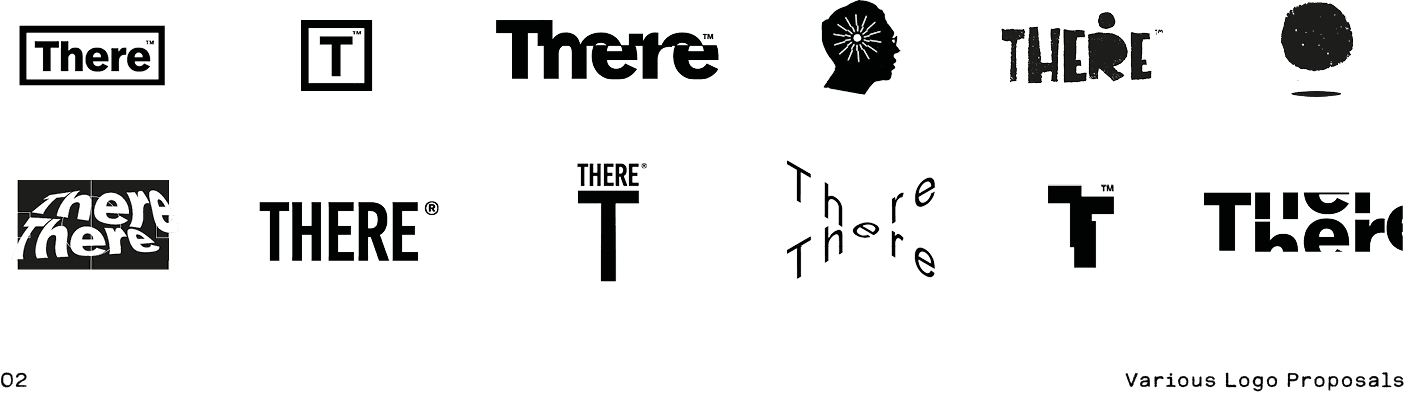
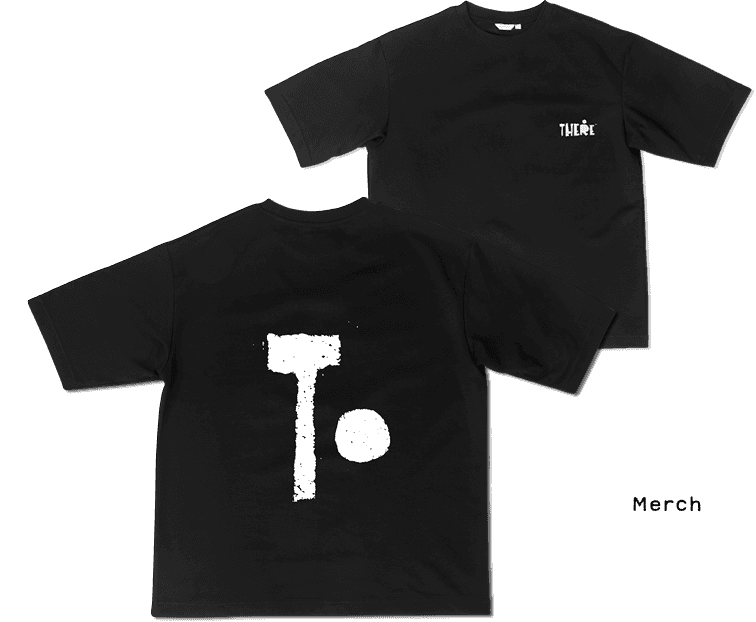
For There’s logo, we tried several different approaches to reflect the brand’s deep roots in sports culture and to create a mark that can be easily recognized and remembered across different platforms and mediums. Our goal was to design something simple but strong, so it works well in digital use, print, merchandise, and social media. In the final direction, we focused on elements such as “dirt,” “natural,” and “imperfect.” The idea was inspired by a casual soccer game played with friends on the weekend, on a rough dirt field. We wanted to capture that raw feeling of competition, ambition, and fully being “there” in the moment. The final logo reflects this honest and grounded energy, staying true to the spirit of sports culture.
For There’s logo, we tried several different approaches to reflect the brand’s deep roots in sports culture and to create a mark that can be easily recognized and remembered across different platforms and mediums. Our goal was to design something simple but strong, so it works well in digital use, print, merchandise, and social media. In the final direction, we focused on elements such as “dirt,” “natural,” and “imperfect.” The idea was inspired by a casual soccer game played with friends on the weekend, on a rough dirt field. We wanted to capture that raw feeling of competition, ambition, and fully being “there” in the moment. The final logo reflects this honest and grounded energy, staying true to the spirit of sports culture.
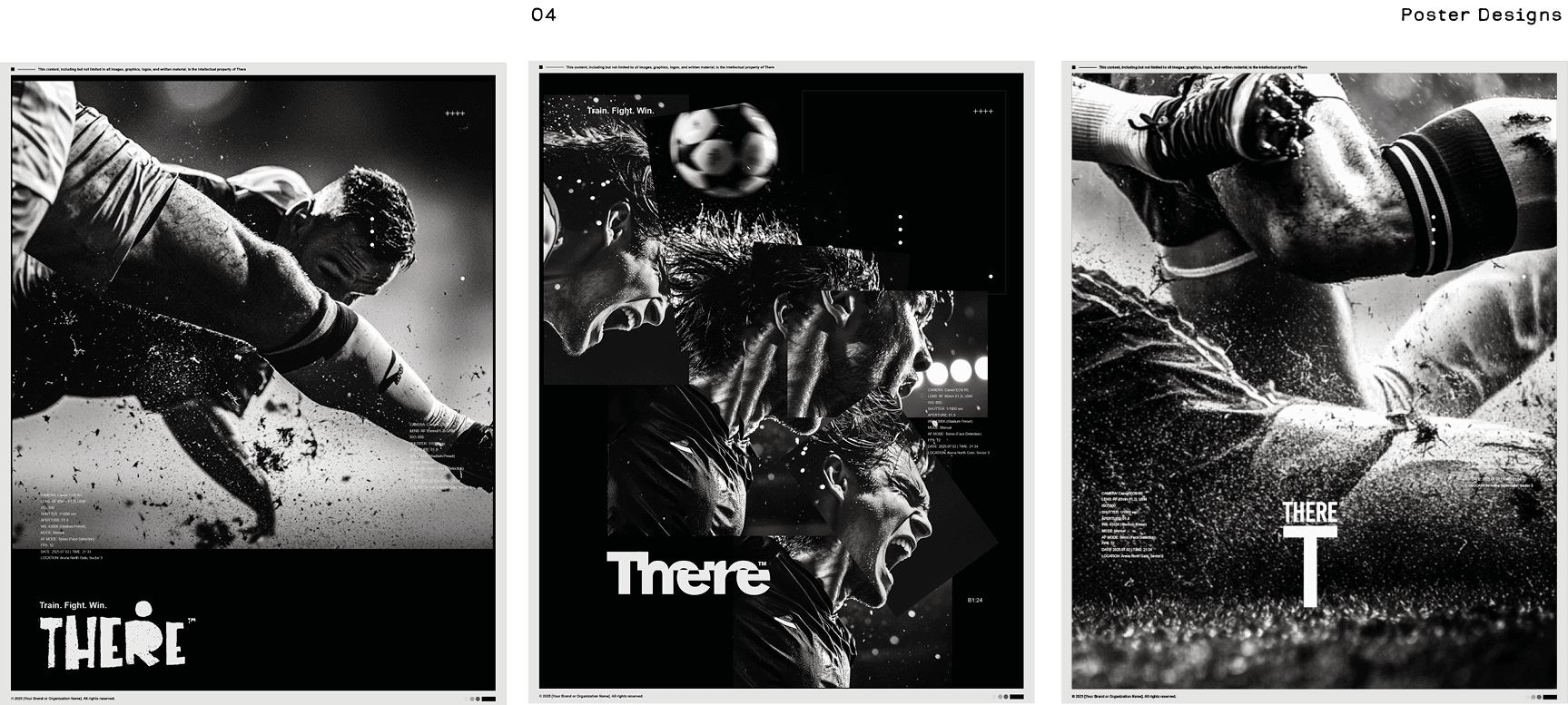
We designed a series of poster graphics to reflect that same spirit and energy. The posters focus on the raw moments of impact and tension that happen during sports events, such as players clashing, falling, or pushing their limits. We highlighted elements like dirt, sweat, and physical contact to show the real and unfiltered side of competition. The compositions are direct and bold, aiming to capture movement and intensity rather than perfection. Through these visuals, we wanted to express the emotional and physical reality of sports, and to stay true to the brand’s focus on being present in those strong and honest moments.
We designed a series of poster graphics to reflect that same spirit and energy. The posters focus on the raw moments of impact and tension that happen during sports events, such as players clashing, falling, or pushing their limits. We highlighted elements like dirt, sweat, and physical contact to show the real and unfiltered side of competition. The compositions are direct and bold, aiming to capture movement and intensity rather than perfection. Through these visuals, we wanted to express the emotional and physical reality of sports, and to stay true to the brand’s focus on being present in those strong and honest moments.
///
Rebranding
.wrk
(CASE STUDY 3)
(CASE STUDY 3)
COOKLIFE 10TH YEAR ANNIVERSARY
2025,Istanbul
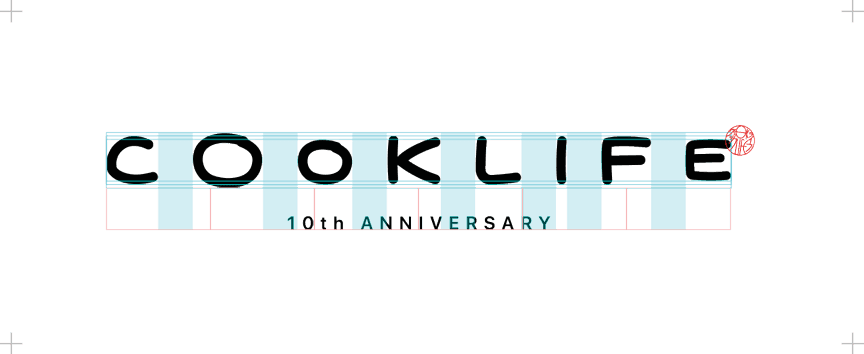
We worked on the rebranding of Cooklife in Istanbul for their special 10th year anniversary. Our first step was to design a custom hanko-style stamp that reflects the brand’s Japan-inspired design approach and its long connection with Japanese aesthetics. This stamp became a symbolic mark for the anniversary and was used across different applications. After that, we developed a custom handmade font and created a special anniversary logo with visible handmade details. These touches were intentional, representing the care, effort, and craftsmanship behind the brand’s identity. The handmade elements also symbolize everyone who has contributed with their own hands and dedication over the past 10 years, showing appreciation for the people who helped build the brand step by step.
We worked on the rebranding of Cooklife in Istanbul for their special 10th year anniversary. Our first step was to design a custom hanko-style stamp that reflects the brand’s Japan-inspired design approach and its long connection with Japanese aesthetics. This stamp became a symbolic mark for the anniversary and was used across different applications. After that, we developed a custom handmade font and created a special anniversary logo with visible handmade details. These touches were intentional, representing the care, effort, and craftsmanship behind the brand’s identity. The handmade elements also symbolize everyone who has contributed with their own hands and dedication over the past 10 years, showing appreciation for the people who helped build the brand step by step.
////COFFEE BEAN PACKAGING
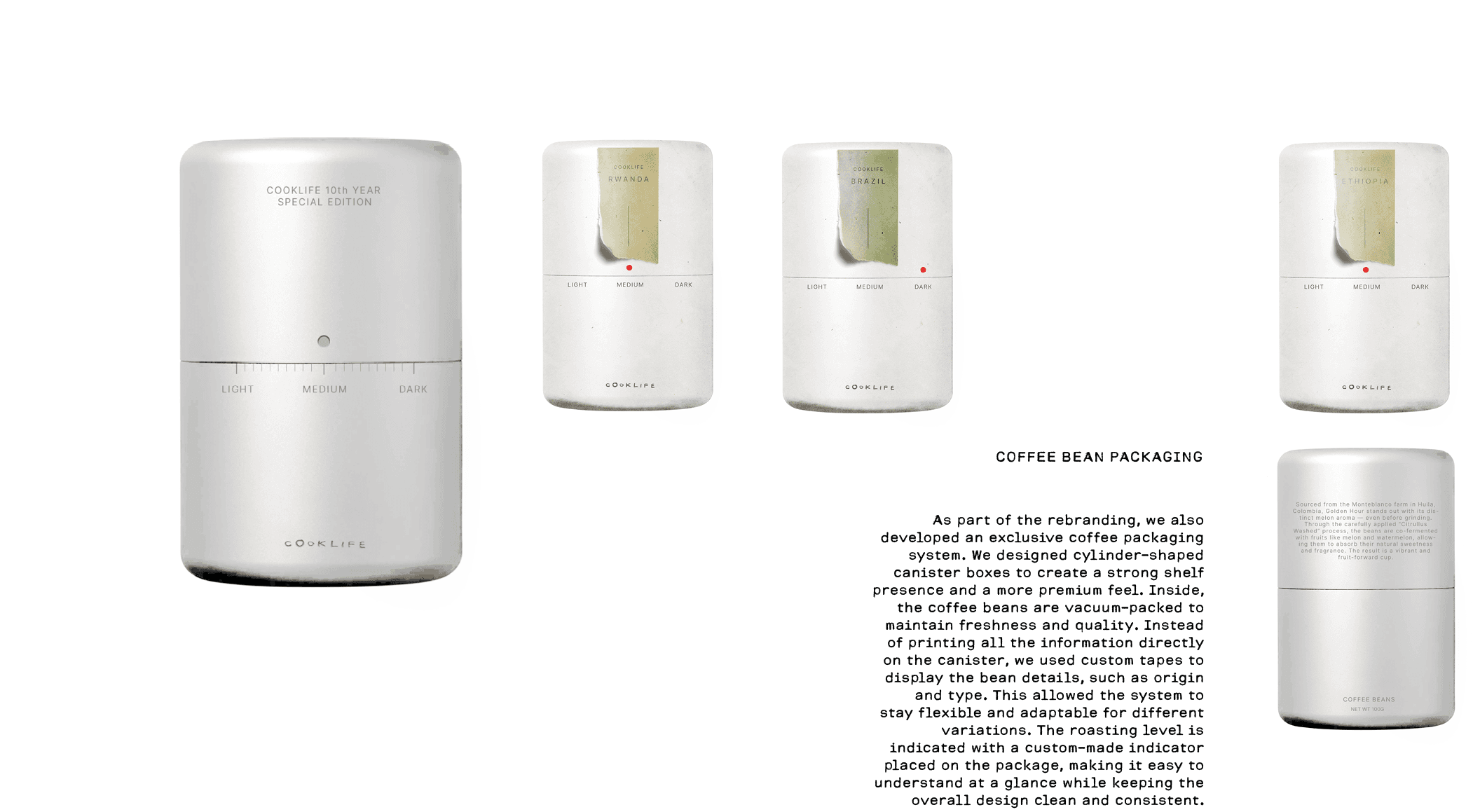
As part of the rebranding, we also developed an exclusive coffee packaging system. We designed cylinder-shaped canister boxes to create a strong shelf presence and a more premium feel. Inside, the coffee beans are vacuum-packed to maintain freshness and quality. Instead of printing all the information directly on the canister, we used custom tapes to display the bean details, such as origin and type. This allowed the system to stay flexible and adaptable for different variations. The roasting level is indicated with a custom-made indicator placed on the package, making it easy to understand at a glance while keeping the overall design clean and consistent.
////COFFEE BEAN PACKAGING
As part of the rebranding, we also developed an exclusive coffee packaging system. We designed cylinder-shaped canister boxes to create a strong shelf presence and a more premium feel. Inside, the coffee beans are vacuum-packed to maintain freshness and quality. Instead of printing all the information directly on the canister, we used custom tapes to display the bean details, such as origin and type. This allowed the system to stay flexible and adaptable for different variations. The roasting level is indicated with a custom-made indicator placed on the package, making it easy to understand at a glance while keeping the overall design clean and consistent.
////GRAPHIC ELEMENTS
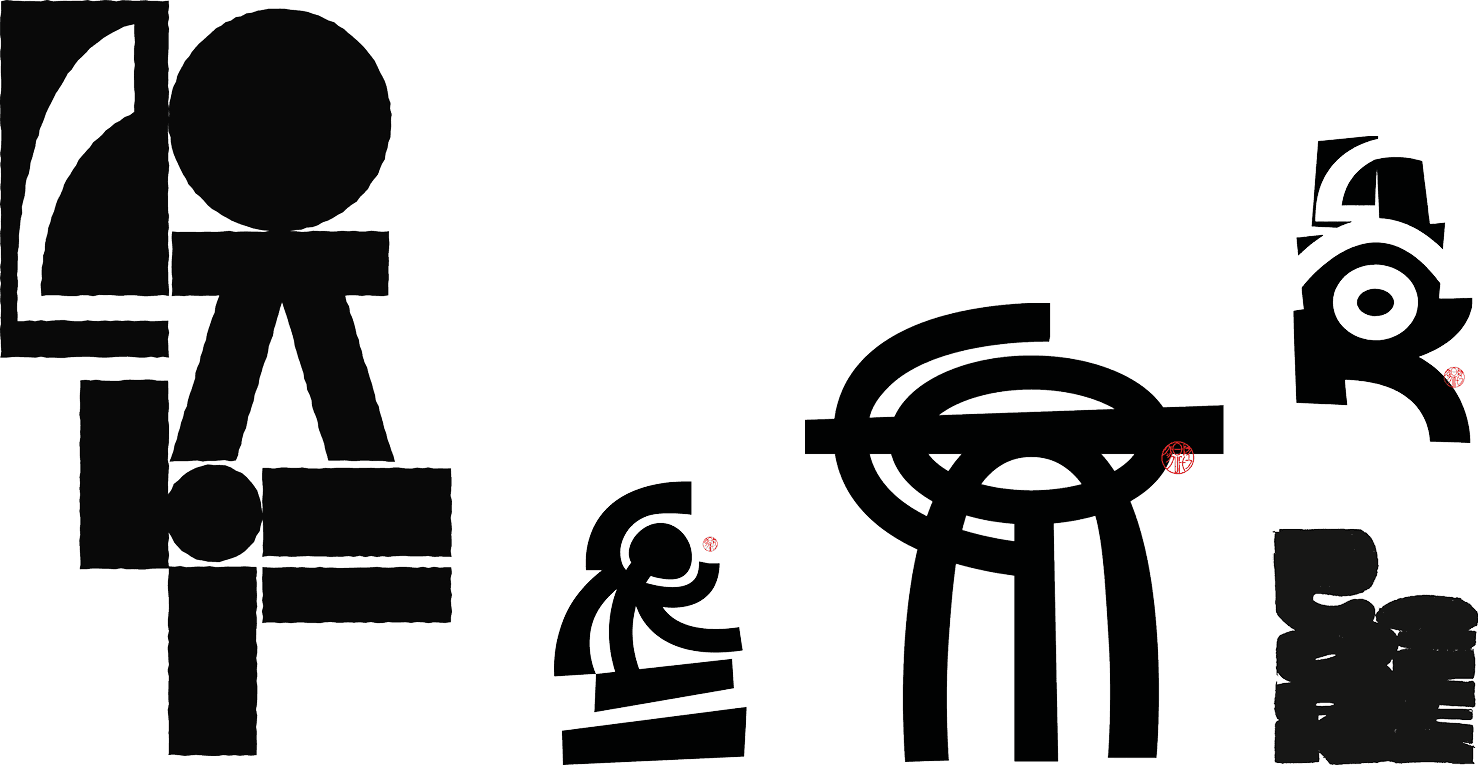
Taking inspiration from old and traditional graphic elements found in folk culture around the world, we developed a series of custom graphics based on the word “cook.” We explored different regions and visual references, looking at patterns, symbols, and handmade lettering styles that carry a strong cultural feeling. Instead of following one fixed style, we created several abstract interpretations of the word, each with its own character and rhythm. Some versions focus on bold and simple shapes, while others are more detailed and expressive. The goal was to reflect the universal and timeless nature of cooking, while giving the brand a flexible visual language that feels both rooted in tradition and open to different interpretations.
////GRAPHIC ELEMENTS
Taking inspiration from old and traditional graphic elements found in folk culture around the world, we developed a series of custom graphics based on the word “cook.” We explored different regions and visual references, looking at patterns, symbols, and handmade lettering styles that carry a strong cultural feeling. Instead of following one fixed style, we created several abstract interpretations of the word, each with its own character and rhythm. Some versions focus on bold and simple shapes, while others are more detailed and expressive. The goal was to reflect the universal and timeless nature of cooking, while giving the brand a flexible visual language that feels both rooted in tradition and open to different interpretations.